Vazamentos em juntas continuam entre as principais causas de perdas operacionais, emissões fugitivas, paradas não programadas e riscos à segurança em instalações industriais.
Embora muitas vezes as vedações industriais sejam apontadas como responsáveis pelo problema, a experiência da indústria e a literatura técnica demonstram que a maioria das falhas está relacionada à montagem da união flangeada.
A ASME PCC-1 – Guidelines for Pressure Boundary Bolted Flange Joint Assembly consolidou décadas de experiência em campo ao estabelecer procedimentos para a montagem correta de juntas flangeadas.
Da mesma forma, fabricantes renomados, como a KLINGER, enfatizam que o desempenho da vedação depende da interação entre junta, flanges, parafusos, lubrificação, ferramentas e procedimentos de montagem.
Neste artigo, apresentamos as 10 falhas mais comuns em vedações industriais, organizadas de acordo com a importância atribuída pela ASME PCC-1 e pelas melhores práticas internacionais.
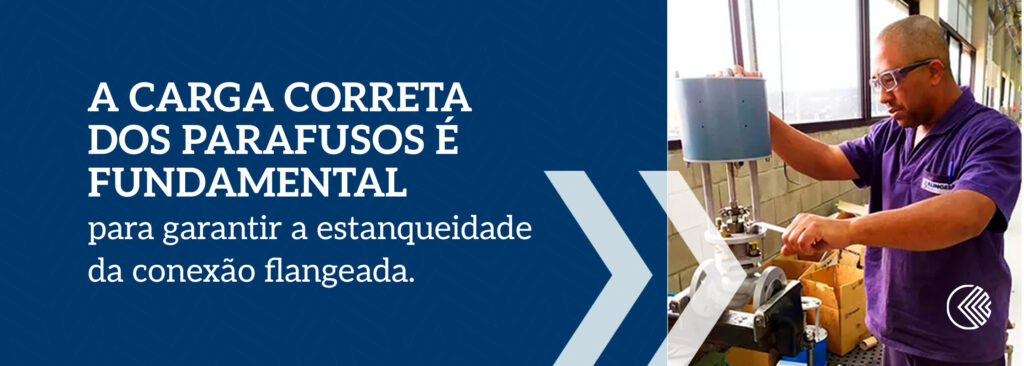
1. Carga inadequada dos parafusos
A principal função dos parafusos é gerar a compressão necessária para que a junta produza uma vedação eficiente.
Quando a carga aplicada é inferior ao necessário, a junta não consegue preencher completamente as irregularidades das faces dos flanges, permitindo a passagem do fluido.
Por outro lado, uma carga excessiva pode esmagar a vedação, provocar deformações permanentes ou até danificar os parafusos e os flanges.
Segundo a ASME PCC-1, controlar corretamente a carga dos parafusos é o fator mais importante para garantir a estanqueidade de uma conexão flangeada.
Como evitar
Utilizar os valores de torque ou carga especificados
Empregar ferramentas calibradas
Considerar o coeficiente de atrito da lubrificação utilizada
Controlar a carga final em todos os parafusos
2. Distribuição desigual da carga entre os parafusos
Mesmo quando o torque aplicado é correto, diferenças entre as cargas individuais dos parafusos podem provocar compressão desigual da junta.
Essa situação cria regiões de baixa pressão de contato que se tornam pontos preferenciais para vazamentos.
A PCC-1 recomenda que o aperto seja realizado em sequência cruzada, em diversos passes sucessivos, para equalizar a carga ao redor de toda a junta.
Como evitar
Seguir rigorosamente a sequência de aperto
Realizar múltiplos passes de torque
Executar o passe final de uniformização
3. Procedimentos inadequados de montagem
Grande parte dos vazamentos ocorre porque os procedimentos de montagem não são seguidos corretamente.
Entre os erros mais frequentes estão:
Aperto em apenas uma etapa
Ausência de limpeza das superfícies
Ferramentas descalibradas
Falta de lubrificação
Montagem realizada por pessoal sem treinamento
A ASME PCC-1 dedica boa parte de seu conteúdo justamente à padronização desses procedimentos.
Como evitar
Adotar procedimentos escritos
Treinar os montadores
Utilizar equipamentos calibrados
Registrar as etapas da montagem
4. Seleção incorreta da junta de vedação
Nenhuma vedação é universal.
Cada aplicação possui requisitos específicos relacionados à pressão, temperatura, fluido, acabamento dos flanges e tipo de conexão.
Uma junta inadequada pode sofrer degradação química, perda de elasticidade, extrusão ou falha mecânica.
Como evitar
Verificar compatibilidade química
Considerar pressão e temperatura de projeto
Consultar as recomendações do fabricante
Atender aos requisitos normativos
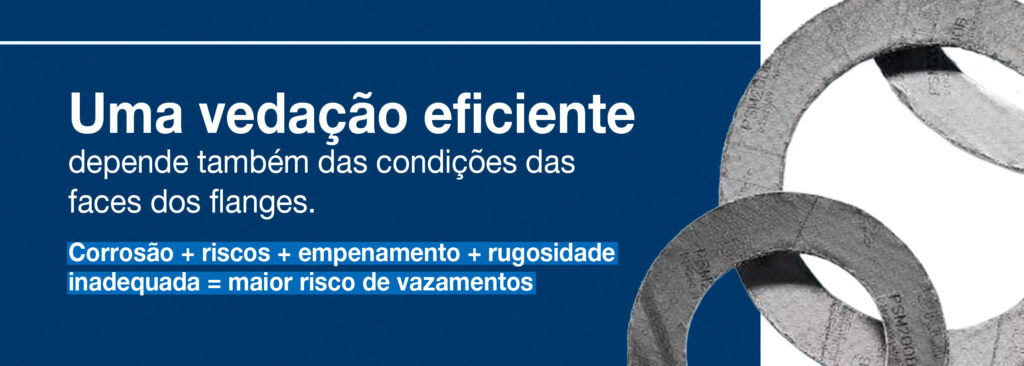
5. Condições inadequadas das faces dos flanges
Mesmo a melhor vedação não consegue compensar flanges excessivamente danificados.
Corrosão, riscos profundos, empenamentos e rugosidade inadequada reduzem significativamente a eficiência da vedação.
A inspeção visual e dimensional das faces deve fazer parte da rotina de manutenção.
Como evitar
Inspecionar as superfícies antes da montagem
Verificar empenamentos
Confirmar a rugosidade recomendada para cada tipo de junta
Reparar ou substituir flanges danificados
6. Problemas em parafusos, porcas e lubrificação
A carga aplicada depende diretamente das condições do conjunto de fixação.
Parafusos corroídos, roscas danificadas ou lubrificação inadequada alteram significativamente o atrito durante o aperto, fazendo com que o torque aplicado não resulte na carga desejada.
Como evitar
Inspecionar todos os elementos de fixação
Utilizar lubrificantes adequados
Substituir componentes danificados
Evitar mistura de materiais incompatíveis
7. Desalinhamento dos flanges ou da tubulação
É relativamente comum tentar corrigir desalinhamentos utilizando os próprios parafusos.
Essa prática introduz cargas externas que reduzem a compressão uniforme da junta e aceleram o aparecimento de vazamentos.
A PCC-1 recomenda que os flanges estejam alinhados antes da instalação da junta.
Como evitar
Alinhar corretamente a tubulação
Eliminar esforços externos
Nunca utilizar os parafusos para aproximar flanges desalinhados
8. Relaxamento da junta e dos parafusos
Após a montagem, pode ocorrer redução gradual da carga residual devido à acomodação dos materiais, fluência da junta, ciclos térmicos ou relaxamento dos parafusos.
A perda dessa carga reduz a pressão de contato da junta.
Como evitar
Selecionar materiais adequados
Considerar os efeitos da temperatura
Utilizar procedimentos de reaperto quando tecnicamente permitidos
9. Reutilização de juntas
Após serem comprimidas, muitas juntas sofrem deformações permanentes.
A reutilização reduz significativamente sua capacidade de vedação e aumenta a probabilidade de vazamentos.
Por esse motivo, a KLINGER recomenda a substituição da junta sempre que a conexão for desmontada.
Como evitar
Utilizar juntas novas em cada intervenção
Seguir as recomendações do fabricante
Manter estoque adequado para manutenção
10. Operação fora das condições de projeto
Mesmo uma montagem correta pode falhar quando o equipamento opera além dos limites previstos.
Sobrecargas de pressão, temperaturas excessivas, ciclos térmicos intensos e vibrações podem reduzir a vida útil da vedação.
Como evitar
Respeitar os limites de projeto
Monitorar condições operacionais
Revisar a seleção da vedação quando houver alterações no processo
Como evitar falhas e aumentar a confiabilidade das vedações industriais
A experiência acumulada pela indústria demonstra que a maioria dos vazamentos em conexões flangeadas não está relacionada à qualidade das vedações industriais, mas à forma como o conjunto flangeado é projetado, montado e mantido.
A ASME PCC-1 reforça que a vedação deve ser tratada como um sistema integrado composto por flanges, parafusos, porcas, junta, lubrificante, ferramentas e procedimentos de montagem. A negligência em qualquer um desses elementos compromete o desempenho do conjunto.
Investir na padronização dos procedimentos, na capacitação das equipes, na inspeção dos componentes e no controle da carga dos parafusos é a estratégia mais eficaz para aumentar a confiabilidade das vedações industriais, reduzir custos de manutenção, minimizar emissões fugitivas e elevar os níveis de segurança das instalações industriais.
Usamos cookies para otimizar nosso site e nosso serviço.
Funcional
Sempre ativo
O armazenamento ou acesso técnico é estritamente necessário para o fim legítimo de permitir a utilização de um determinado serviço expressamente solicitado pelo assinante ou utilizador, ou para o fim exclusivo de efetuar a transmissão de uma comunicação numa rede de comunicações eletrónicas.
Preferências
O armazenamento ou acesso técnico é necessário para o propósito legítimo de armazenamento de preferências não solicitadas pelo assinante ou usuário.
Estatísticas
O armazenamento técnico ou acesso que é usado exclusivamente para fins estatísticos.O armazenamento técnico ou acesso que é usado exclusivamente para fins estatísticos anónimos. Sem uma intimação, conformidade voluntária por parte de seu Provedor de Serviços de Internet ou registos adicionais de terceiros, as informações armazenadas ou recuperadas apenas para esse fim geralmente não podem ser usadas para identificá-lo.
Marketing
O armazenamento ou acesso técnico é necessário para criar perfis de usuário para enviar publicidade ou para rastrear o usuário em um site ou em vários sites para fins de marketing semelhantes.